Wednesday, 27 January 2016


Describe the uses of Personal learning networks


·         A Personal Learning Network is an environment where learners can access a range of services and tools for supporting their needs. They offer greater opportunities for personalisation.

·         This is a tool that allows teachers and administrators across the world to communicate with each other through social media. This allows them to seek advice, trade practices or just network with other professionals

·         A personal learning network is powerful as it can extend across the globe. Social media provides a quick and easy way to share ideas and get immediate feedback.

·         Users can choose who they interact with and enter with certain goals, problems or interests and communicate with others in their PLN (Personal Learning Networks).

·         The following is an excerpt from Dryden's and Vos' book on learning networks:

"For the first time in history, we know now how to store virtually all humanity's most important information and make it available, almost instantly, in almost any form, to almost anyone on earth. We also know how to do that in great new ways so that people can interact with it, and learn from it.

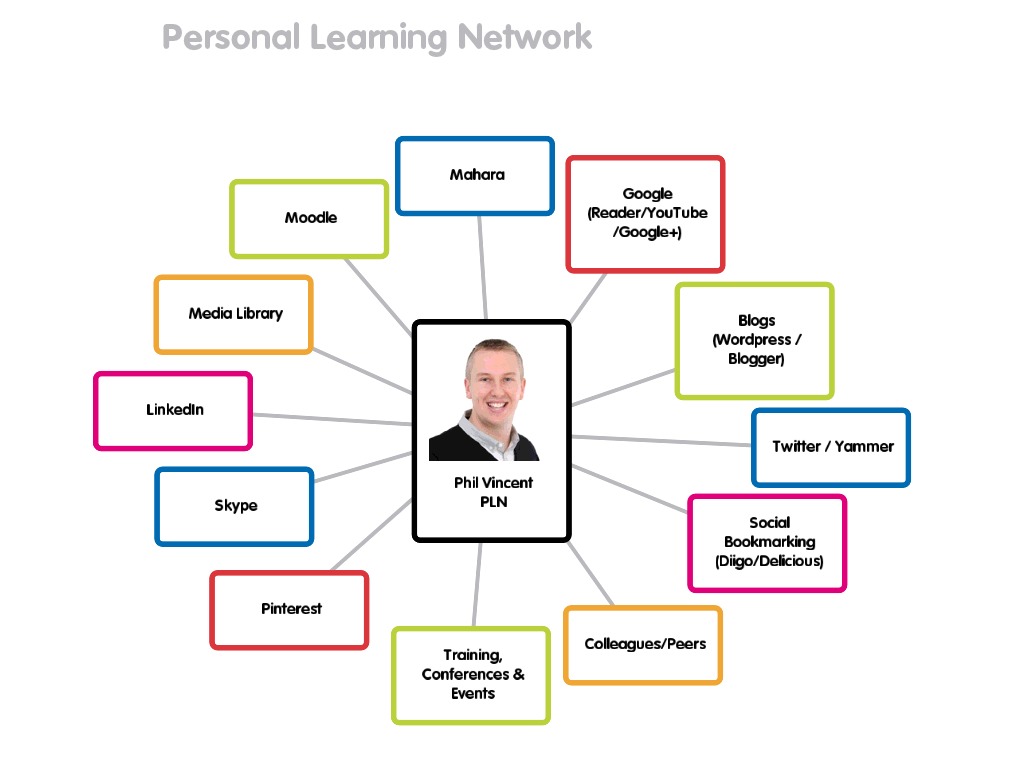
Below is an example of a personal learning network


This link shows why twitter and Pinterest are important in your personal learning network


Rights and responsibilities of individuals using social media


·        There are a number of cases increasing where individuals have been prosecuted for their own actions on social media pages such as YouTube, Facebook and Twitter. below are some link for information on the above social media pages:


People are usually not aware of the Law about social media when posting things on these social media sites and that they are legally binding statements.

·        There are a number of laws such as the Malicious Communications Act of 1988, the Communications Act of 2003, and the criminal Justice and Police Act of 2001. These all cover forms of methods of communicating including email and social media. It is illegal to send “indecent” or “grossly offensive” messages. It is also illegal to send “threats” or “false information” with the intention of “causing anxiety or distress” to other individuals.

·        The Harassment act of 1997 plays a part in the protection of social media users and if an individual is found guilty of sending such content, they can face both a fine and up to six months in prison.

·        Social media is very similar in comparison to communications via telephone or text message. You have the right to feel safe when using these particular ways of communicating. You also have the right of freedom of speech unless it may cause anxiety and/or distress to anyone who may view the post/message.

·        It is more complicated when protecting yourself. Each website has different methods of protecting its users. The most effective way to protect yourself is by paying attention to the privacy settings and blocking users who you do not wish to communicate with. Most sites also give users the ability to report an individual of cyber bullying or threatening behaviour.

·        You also have the protection of both the police and UK legal system. Providing the police with evidence to show that somebody has made you feel distress and/or anxious on social media may be enough to lead to a prosecution.

·        Social media users may think that any images, videos or posts that they publish on social media sites may never be viewed again if deleted, however most websites store these after they have been deleted in order to protect other users if they report abuse then this content may be used and viewed during an investigation.

·        In conclusion a survey taken recently showed that over 30% of teenagers have been affected by cyber bullying in their life and with the growth of new social media sites this number is certain to increase. However it is becoming easier to protect yourself from cyber bullying as well as avoiding being considered a cyber-bully or offending individuals over social media
 
  • File sharing is the practice of distributing or providing access to digital media, such as computer programs, multimedia (audio, images and video), documents or electronic books. It involves various legal aspects as it is often used to exchange intellectual property that is subject to copyright law or licensing.
  • Music copyright laws are those laws that protect the copyright interest that musicians and performers have over their own, original work.
    Copyright law in the UK protects any original work automatically; there is no need to use a lawyer to register your recording or production.
below is a link that explains the copyright infringement of celebrities to use videos and sound files for profit that they don't own http://uk.businessinsider.com/facebook-copyright-infringement-facebook-content-id-celebrities-2015-5


Bethany Smillie

Wednesday, 20 January 2016

social presence including digital footprint


1.       Explain social presence including digital footprint


Social presence is the power of learners to project their personal appearance into the community of inquiry, by this means featuring themselves as ‘real people.’


Social presence is the level of communication whether it is face to face or through technology.  

Social presence is all to do with body language, the lack of conversations and the motivation. Social presence through technology has different levels of low and high, video calling is a high social presence because you can see how they are reacting, their body language and their facial expressions. Audi o calling is a low social presence because all you can hear is their voice.


Face to face social presence is the highest communicating as you can see each other’s body language, if they’re interested or not, if they are paying attention or not.


Examples of bad social presence


·         On your phone when people are trying to talk to you

·         Not paying attention

·         Showing no interest

·         Falling asleep when people are talking


The link above is a slide show, slides 7-12 show us examples of social presence clues.


On the Internet a digital footprint is the word used to describe the footprints that people leave online. This is information transmitted online, such as forum registration, e-mails and attachments, uploading videos or digital images and any other form of transmission of information — all of which leaves traces of personal information about you available to others online.


This link above is telling us what the meaning of digital footprints is. Digital footprints are personal things you put online for others to see. Digital footprint is the word that is used to label the trails that people leave online, such as uploading pictures, videos etc. all that people online will be able to view whenever they want to until or is ever deleted.


This link above tells us that it is quite impossible not to leave any footprints behind, even the comments on Facebook, retweets on twitter even from accounts that are private leave a trail. You should have an understanding of the private settings on your social media accounts and should


Digital footprint can be traced by Facebook, where you can see who you searched up, what pages you’ve liked, your photographs and anything you have uploaded. Google, where you can search up a name and it can trace up any person and they’re links to social media links as well as pictures. YouTube, anyone can watch all of your videos that you have uploaded.
 
 
Natalie Patterson

Historical development of social media


Historical development of social media


What is social media

Social media is the collective of online communications channels dedicated to community-based input, interaction, content-sharing and collaboration. Websites and applications dedicated to forums, microblogging, social networking, social bookmarking, social curation, and wikis are among the different types of social media.


Social Media Timeline

Primitive social media

·         1979 - Usenet : posts news to newsgroups              below is an example of  UseNet
 
·         1979 – Bulletin Board System (BBS): first site with login option for interaction

·         1980 – CompuServe : first chat introduced

·         1984 – Prodigy Communications Corporations : pioneered online portals and online news

The medieval era of social media

·         1988 -  IRC (internet relay chat) :
         allowed file sharing link sharing
              and keeping in touch

·         1996 – ICQ : multi user messaging ,
multiplayer games, made emoticons &
abbreviations such as “lol” and “brb”
became famous

·         1997 – six degrees : Glimpses of first
       social media aspects like todays ( creating
       a profile and adding friends )                                                                                Above is an image of an IRC system

·         1999 – Live Journal : first to introduce dynamic content on the blogs and forum, create groups and interact

The golden era of social media

·         2001 – Wikipedia : the online free encyclopaedia was launched

·         2002 – Friendster : operated allowing people to meet new people and increase their network

·         2003 – Hi 5 : included photo sharing, user groups, social gaming and status updates

·         2003 – MySpace : private messaging public comments published to a user’s profile and bulletins sent to friends

·         2004 – Facebook : opened only for the Harvard university students

·         2004 – Orkut : owned by Google , meet old and new friends , rate friends, change themes etc

·         2004 – Flickr : photo sharing platform

·         2005 – Youtube : first organised video streaming and video sharing platform

·         2005 – Reddit : entertainment and social networking platform

·         2006 – Facebook : best performing social media platform to date with 1.44 billion active users

·         2006 – Twitter : a micro blogging platform with a question and answer format

·         2007 – Tumblr : live streaming and micro blogging platform

·         2009 – Whatsapp : ios android and windows based app for personal and group chats

·         2012 – snapchat : new platform for chatting by posting pictures

·         2012 – Tinder : a social discovery app for android and ios

·         2013 – Vine  : a multi-platform video sharing social application

·         2014 - Pheed : a social media platform with live broadcast option


Source:The history of social media Youtube

The Surge In Social Media Usage


The recent surge in social media use is due to a lot of different reasons a few of these could be
  • switching from dial up to broadband allowed greater speeds and a more efficient rate to productively use
  • the introduction of portable technology EG. laptops tablets and mobiles have underwent a massive technological leap in the last 10 years
  • with broadband being made more available it has also dropped the price substantially making it a lot more accessible to many homes who couldn't have had access before.

Mobile Technology

mobile technology has played a major role in social media becoming more of an everyday thing for most of us the fact that almost everyone has either a laptop, tablet or mobile that can allow us to access our social media profiles on the go instead of sitting waiting on dial up on an old desktop the best advancements of mobile technology are in our pockets with us almost everyday and it appears to be natural progression within this sector as we understand the capabilities of this kind of tech more and more every year


Social Media


Social media has grown massively in such a short time period it went from basic login system and bulletin board systems to a well-oiled social machine allowing users from all over the world to connect , trade goods ( eBay, Gumtree ), Game and share gaming experiences (twitch ,Youtube) and many others the recent rise has made it easier than before to stay connected whether it be for business or pleasure one thing is for certain the history of social media however brief it may be has changed the world we know today .
Andrew tonner