Monday, 7 March 2016

Justification

Evaluation

We decided to use blogger as it was an easily accessible form of social media that we would all have the skill level to navigate the website easily and also it was recommended to us by our lecturer and it was a good choice as images where easily moved around the content with the text warping around it automatically all links where also easily implemented through the html editor in the post editing section of the site making it a great fit for doing this blog.


Wednesday, 24 February 2016

Societal Issues Raised By Social Media

Societal Issues Raised By Social Media


Location disclosure

with social media sites now being able to post your location if you allow it, it can lead to a lot of safety issues if for example through stalking or if your are being bullied your attacker can use this to almost track where your are and what you've been doing based on your posts and chat through the social media site also targeted ads have been known to add this to there information to pick locations closer to you however with most social media sites you can disable the site from allowing the location to be shown which in this day is very advisable.

File Sharing
with social media making file sharing a lot easier and faster it allows for videos and propaganda from extreme religious or political groups to try and recruit or hide what they are actually doing by gaining interest from all different social angles depending on there targeted groups EG. ISIS have been known for recruiting younger women with the promise of a loving home where they are supposedly going to become a wife or be offered a job and the men often talked up to believe he is going to become a warrior for the right cause and be a hero when in actual fact a lot of the time many of the young woman are tricked in to becoming slaves to many cult like organisations  and the young men become more of the fallen

it has also allowed for things such as revenge porn where maybe the couple recorded some acts when they where happily together but through some upset they have become separated and end up on the wrong end of revenge with there private life being viewed liked and shared by millions of people because there ex partner felt vexed

then there is stuff like sexual blackmail where two people online get talking maybe even feel like they have connected well one party at least then it turns out that once the exchange of sexual content has been made it turns from heaven to hell and the black mail ensues with messages such as "send £500 or ill post these videos on your Facebook or ill put those pics up on twitter"
attacks like this have become quite common place as of late with a relevant  example of it being a young boy who killed himself over online chat blackmail https://www.youtube.com/watch?v=ODb4PrM3FIg> Youtube video about young boy who took his own life over social media black mail  


Andrew Tonner  & Bethany Smillie

Wednesday, 17 February 2016

Potiential Dangers of Social Media


 Dangers of social media to individuals including personal safety

Sites such as Facebook and twitter can be tempting for everyone to go on and talk to their friends and family, they also host threats to everyone’s safety and reputation.  We all want to be social and have fun, but these websites may not be the best avenue for social interaction.

 ONLINE PREDATORS

Online predators anonymously take the internet to talk to Youngers; the internet makes it terrifyingly easy for predators to target unsuspecting kids online. Quite a lot of the time, kids on Facebook will get a friend request they do not know but they will accept. These could be foreigners or locals; they will chat with these youngsters. Commenting on how they look, asking personal questions or even asking to meet up. Most parents trust their kids on social media but how can you be sure the new “friend” your kid is talking to on Facebook is really a child? You can’t, that’s why sites like Facebook are dangerous for kids and why social media sites should be used for adults.  


The YouTube link above is a video of an experiment this man does by making a fake Facebook profile of a 15 year old boy where he adds random 14 year old girls and chats to them, he contacts their parents to let them aware of what he’s doing, he chats with different 14 year old girls for a few days and then asks them to meet up, one at the park and others at their house. Most of the girls agree to meet and when the man turns up their parents come out. This is to teach these girls not to talk to anyone online they don’t know.

"Kids are going to post photos and personal information.  At least they should be aware of the risks.  At least they should use the privacy tools built into the sites to keep people they don't know from accessing their information and their data.  And at least moms and dads should learn about what they are doing."


 — Ernie Allen, President & CEO, National Center for Missing & Exploited Children


Public profiles put kids at a much greater risk to:


  •Receive a message from a stranger


  •Meet with a stranger


  •Be harassed by peers 


Other concerns of social networking sites:  


  •Lack of age-verification mechanisms

  • Posting provocative pictures and videos

  •Easy access for predators and cyberbullies

  •Excessive or addictive access

 •Access to unhealthy “groups”


This link below goes on to explain further about the potential dangers of social media.

http://www.people-communicating.com/dangers-of-social-networking-sites.html


CYBER BULLYING

Reasons for cyber bullying

·         To show off to friends (11%)

·         To be mean (14%)

·         Something else (16%)

·         To embarrass them (21%)

·         For fun or entertainment (28%)

·         They deserved it (58%)

·         To get back at someone (58%)


The link above is explaining what cyber bullying is. It gives you examples, effects and frequency of cyber bullying.

“Kids who are being cyberbullied are often bullied in person as well. Additionally, kids who are cyberbullied have a harder time getting away from the behavior.”


The video above is about a 17 year old girl who was bullied by her own friends. She tells her story and shows us how cyber bullying can ruin lives and lead to suicide.


Identity Theft

Social media is a great outlet to engage with family and friends, but are you sharing too much in the process?  Identity theft can occur with only a few key pieces of your personal information.  And now, courtesy of social media profiles, that information is easier than ever to steal.  For example, an average Facebook profile lists a person’s name, date of birth, and hometown.  So already you have provided a thief with crucial information they need to steal your identity.
The most effective way to protect yourself from identity theft is to make your social profile private.  As well, consider the information your putting on your site. Does your friend of a friend really need to know your home address?  Probably not.  The more personal details you withhold, the safer you will be.


Bethany Smillie and Natalie Patterson

Monday, 8 February 2016

Types Of Social Media

The Types of Social Media 


Social Networking 


Social networking is the practice of expanding the number of one's business and/or social contacts by making connections through individuals. 

While social networking has gone on almost as long as societies themselves have existed, the unparalleled potential of the Web to facilitate such connections is only now being fully recognized and exploited, through Web-based groups established for that purpose.

Based on the six degrees of separation concept (the idea that any two people on the planet could make contact through a chain of no more than five intermediaries), social networking establishes interconnected online communities (sometimes known as social graphs) that help people make contacts that would be good for them to know, but that they would be unlikely to have met otherwise. 

Depending on the social media platform, members may be able to contact any other member. In other cases, members can contact anyone they have a connection to, and subsequently anyone that contact has a connection to, and so on. Some services require members to have a preexisting connection to contact other members. 

Social media sites include Facebook, Twitter, LinkedIn and Google+.


social media technologies 

(sound/Video) 


All video formats facebook supports 
a complete list of the video formats that can be uploaded to Facebook:

3g2 (Mobile Video)
3gp (Mobile Video)
3gpp (Mobile Video)
asf (Windows Media Video)
avi (AVI Video)
dat (MPEG Video)
divx (DIVX Video)
dv (DV Video)
f4v (Flash Video)
flv (Flash Video)
m2ts (M2TS Video)
m4v (MPEG-4 Video)
mkv (Matroska Format)
mod (MOD Video)
mov (QuickTime Movie)
mp4 (MPEG-4 Video)
mpe (MPEG Video)
mpeg (MPEG Video)
mpeg4 (MPEG-4 Video)
mpg (MPEG Video)
mts (AVCHD Video)
nsv (Nullsoft Video)
ogm (Ogg Media Format)
ogv (Ogg Video Format)
qt (QuickTime Movie)
tod (TOD Video)
ts (MPEG Transport Stream)
vob (DVD Video)
wmv (Windows Media Video)

Source : Facebook file format list

All youtube supported file formats
.MOV
.MPEG4
.MP4
.AVI
.WMV
.MPEGPS
.FLV
.3GPP
.WebM

Source : Youtube file format list

All twitter supported file formats 
Supported image formats: PNG, JPEG, WEBP and GIF. Animated GIFs are supported.
Supported video formats: MP4

Source : Twitter file format list
these are just to give example of a few 


Blogs

a website containing a writer's or group of writers' own experiences, observations, opinions, etc., and often having images and links to other websites.
EG. Blogger, Live Journal or Hub Pages


Wikis

 is a website which allows collaborative modification of its content and structure directly from the web browser. In a typical wiki, text is written using a simplified markup language (known as "wiki markup"), and often edited with the help of a rich-text editor.[1]

A wiki is run using wiki software, otherwise known as a wiki engine. There are dozens of different wiki engines in use, both standalone and part of other software, such as bug tracking systems. Some wiki engines are open source, whereas others are proprietary. Some permit control over different functions (levels of access); for example, editing rights may permit changing, adding or removing material. Others may permit access without enforcing access control. Other rules may also be imposed to organize content. 
EG. Wikipedia 
Source : wikipedia


Virtual Worlds

A virtual world or massively multiplayer online world (MMOW) is a computer-based simulated environment populated by many users who can create a personal avatar, and simultaneously and independently explore the virtual world, participate in its activities and communicate with others.

Source : Virtual Worlds Information

there are many virtual worlds out there such as world of warcraft so i have found a list of the top ten ( unless of course if you have any ideas then comment them for us)  


Source : Top Ten Virtual Worlds

with the growth of technology these days it allows for a type of social media that grants a good fit for anyone wether that is facebook, twitter, tumblr, reddit, twitch, youtube, blogger, snapchat, vine , instagram  and many more

Andrew Tonner

Social Production, Social Intllegence and Social Capital

Social Production, Social Intelligence and Social Capital


Social Production 


Social production occurs when people get together to generate genuine economic value, but little or no overt monetary incentives are involved. Wikipedia may be one of the most widely known examples of social production, with some 30 million different articles in nearly 300 languages, all created and edited by volunteers. (And before you ask just what kind of economic value is created by Wikipedia, you should examine the financial statements of companies like Encyclopedia Britannica and World Book Encyclopedia from twenty years ago.)

source : More detailed description of social production

a short paragraph relating to the founding of wikipedia
(In December 2008, Wales stated that he made Wikipedia's first edit, a test edit with the text "Hello, World!" The oldest article still preserved is the article UuU, created on Tuesday 16 January 2001, at 21:08 UTC. The existence of the project was formally announced and an appeal for volunteers to engage in content creation was made to the Nupedia mailing list on 17 January


The "UuU" edit, the first edit that is still preserved on Wikipedia to this day, as it appears using the Nostalgia skin.
The project received many new participants after being mentioned on the Slashdot website in July 2001, having already earned two minor mentions in March 2001. It then received a prominent pointer to a story on the community-edited technology and culture website Kuro5hin on 25 July. Between these relatively rapid influxes of traffic, there had been a steady stream of traffic from other sources, especially Google, which alone sent hundreds of new visitors to the site every day. Its first major mainstream media coverage was in the New York Times on Thursday 20 September 2001.

Source : Link to first paragraph above
NYT article mentioned in above paragraph
Source : link to new York times article mentioned above

Social Production is now everywhere and as the use of social media continues to grow stronger there is always room online for more whether it is a charity page that has been set up and shared, like pages, buy/sell pages and recently a lot of freebie or trading sites pages and apps have appeared.

Social Intelligence


Social intelligence is the capacity to effectively navigate and negotiate complex social relationships and environments. Data scientist Ross Honeywill believes social intelligence is an aggregated measure of self- and social-awareness, evolved social beliefs and attitudes, and a capacity and appetite to manage complex social change. Psychologist Nicholas Humphrey believes that it is social intelligence, rather than quantitative intelligence, that defines humans

Source : Social intelligence article
an example of social intelligence could be a group of gamers online communicating what to do next to survive or move forward through it working together in a well structured team


Social Capital 


 Social capital is a form of economic and cultural capital in which social networks are central, transactions are marked by reciprocity, trust, and cooperation, and market agents produce goods and services not mainly for themselves, but for a common good.

The term generally refers to (a) resources, and the value of these resources, both tangible (public spaces, private property) and intangible ("actors", "human capital", people), (b) the relationships among these resources, and (c) the impact that these relationships have on the resources involved in each relationship, and on larger groups. It is generally seen as a form of capital that produces public goods for a common good.

Social capital has been used to explain improved performance of diverse groups, the growth of entrepreneurial firms, superior managerial performance, enhanced supply chain relations, the value derived from strategic alliances, and the evolution of communities

A good example of social capital is targeted advertising dependant on what your searches and posts say about what type of products you like allowing companies to pin point what you are most likely to buy so they can display it to you to make the most money or pages that lead you to pages that help there company such as surveys or other promotional pages   

Source : social capital article         
Source : Link to image

Andrew tonner

Wednesday, 27 January 2016


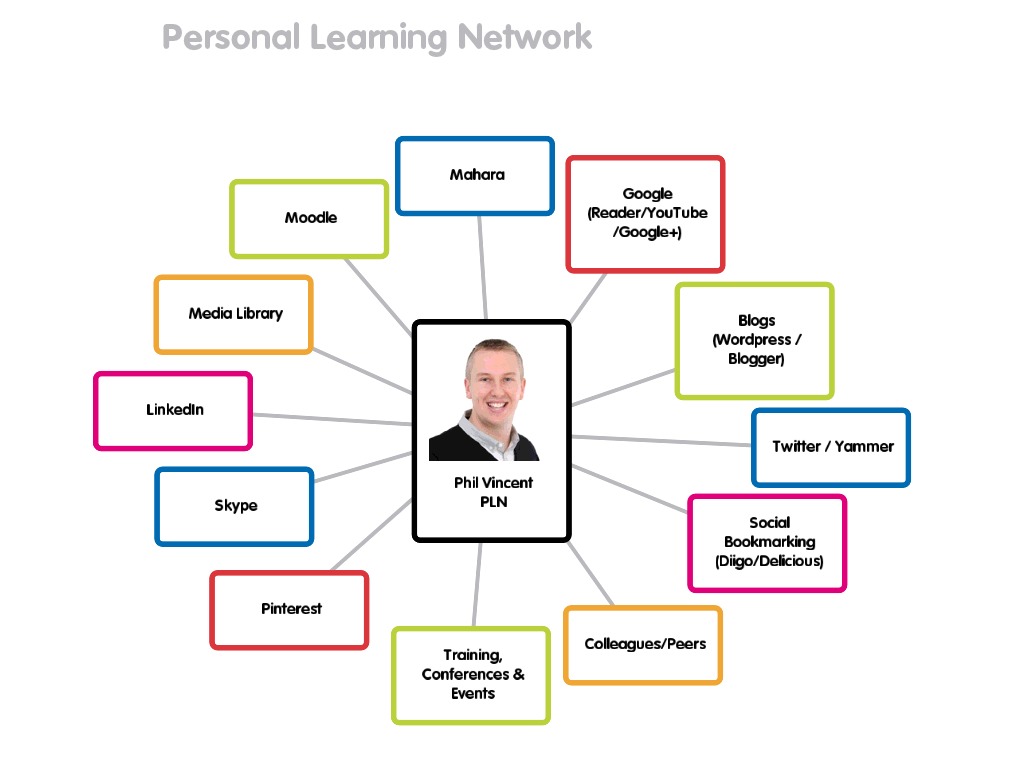
Describe the uses of Personal learning networks


·         A Personal Learning Network is an environment where learners can access a range of services and tools for supporting their needs. They offer greater opportunities for personalisation.

·         This is a tool that allows teachers and administrators across the world to communicate with each other through social media. This allows them to seek advice, trade practices or just network with other professionals

·         A personal learning network is powerful as it can extend across the globe. Social media provides a quick and easy way to share ideas and get immediate feedback.

·         Users can choose who they interact with and enter with certain goals, problems or interests and communicate with others in their PLN (Personal Learning Networks).

·         The following is an excerpt from Dryden's and Vos' book on learning networks:

"For the first time in history, we know now how to store virtually all humanity's most important information and make it available, almost instantly, in almost any form, to almost anyone on earth. We also know how to do that in great new ways so that people can interact with it, and learn from it.

Below is an example of a personal learning network


This link shows why twitter and Pinterest are important in your personal learning network


Rights and responsibilities of individuals using social media


·        There are a number of cases increasing where individuals have been prosecuted for their own actions on social media pages such as YouTube, Facebook and Twitter. below are some link for information on the above social media pages:


People are usually not aware of the Law about social media when posting things on these social media sites and that they are legally binding statements.

·        There are a number of laws such as the Malicious Communications Act of 1988, the Communications Act of 2003, and the criminal Justice and Police Act of 2001. These all cover forms of methods of communicating including email and social media. It is illegal to send “indecent” or “grossly offensive” messages. It is also illegal to send “threats” or “false information” with the intention of “causing anxiety or distress” to other individuals.

·        The Harassment act of 1997 plays a part in the protection of social media users and if an individual is found guilty of sending such content, they can face both a fine and up to six months in prison.

·        Social media is very similar in comparison to communications via telephone or text message. You have the right to feel safe when using these particular ways of communicating. You also have the right of freedom of speech unless it may cause anxiety and/or distress to anyone who may view the post/message.

·        It is more complicated when protecting yourself. Each website has different methods of protecting its users. The most effective way to protect yourself is by paying attention to the privacy settings and blocking users who you do not wish to communicate with. Most sites also give users the ability to report an individual of cyber bullying or threatening behaviour.

·        You also have the protection of both the police and UK legal system. Providing the police with evidence to show that somebody has made you feel distress and/or anxious on social media may be enough to lead to a prosecution.

·        Social media users may think that any images, videos or posts that they publish on social media sites may never be viewed again if deleted, however most websites store these after they have been deleted in order to protect other users if they report abuse then this content may be used and viewed during an investigation.

·        In conclusion a survey taken recently showed that over 30% of teenagers have been affected by cyber bullying in their life and with the growth of new social media sites this number is certain to increase. However it is becoming easier to protect yourself from cyber bullying as well as avoiding being considered a cyber-bully or offending individuals over social media
 
  • File sharing is the practice of distributing or providing access to digital media, such as computer programs, multimedia (audio, images and video), documents or electronic books. It involves various legal aspects as it is often used to exchange intellectual property that is subject to copyright law or licensing.
  • Music copyright laws are those laws that protect the copyright interest that musicians and performers have over their own, original work.
    Copyright law in the UK protects any original work automatically; there is no need to use a lawyer to register your recording or production.
below is a link that explains the copyright infringement of celebrities to use videos and sound files for profit that they don't own http://uk.businessinsider.com/facebook-copyright-infringement-facebook-content-id-celebrities-2015-5


Bethany Smillie

Wednesday, 20 January 2016

social presence including digital footprint


1.       Explain social presence including digital footprint


Social presence is the power of learners to project their personal appearance into the community of inquiry, by this means featuring themselves as ‘real people.’


Social presence is the level of communication whether it is face to face or through technology.  

Social presence is all to do with body language, the lack of conversations and the motivation. Social presence through technology has different levels of low and high, video calling is a high social presence because you can see how they are reacting, their body language and their facial expressions. Audi o calling is a low social presence because all you can hear is their voice.


Face to face social presence is the highest communicating as you can see each other’s body language, if they’re interested or not, if they are paying attention or not.


Examples of bad social presence


·         On your phone when people are trying to talk to you

·         Not paying attention

·         Showing no interest

·         Falling asleep when people are talking


The link above is a slide show, slides 7-12 show us examples of social presence clues.


On the Internet a digital footprint is the word used to describe the footprints that people leave online. This is information transmitted online, such as forum registration, e-mails and attachments, uploading videos or digital images and any other form of transmission of information — all of which leaves traces of personal information about you available to others online.


This link above is telling us what the meaning of digital footprints is. Digital footprints are personal things you put online for others to see. Digital footprint is the word that is used to label the trails that people leave online, such as uploading pictures, videos etc. all that people online will be able to view whenever they want to until or is ever deleted.


This link above tells us that it is quite impossible not to leave any footprints behind, even the comments on Facebook, retweets on twitter even from accounts that are private leave a trail. You should have an understanding of the private settings on your social media accounts and should


Digital footprint can be traced by Facebook, where you can see who you searched up, what pages you’ve liked, your photographs and anything you have uploaded. Google, where you can search up a name and it can trace up any person and they’re links to social media links as well as pictures. YouTube, anyone can watch all of your videos that you have uploaded.
 
 
Natalie Patterson

Historical development of social media


Historical development of social media


What is social media

Social media is the collective of online communications channels dedicated to community-based input, interaction, content-sharing and collaboration. Websites and applications dedicated to forums, microblogging, social networking, social bookmarking, social curation, and wikis are among the different types of social media.


Social Media Timeline

Primitive social media

·         1979 - Usenet : posts news to newsgroups              below is an example of  UseNet
 
·         1979 – Bulletin Board System (BBS): first site with login option for interaction

·         1980 – CompuServe : first chat introduced

·         1984 – Prodigy Communications Corporations : pioneered online portals and online news

The medieval era of social media

·         1988 -  IRC (internet relay chat) :
         allowed file sharing link sharing
              and keeping in touch

·         1996 – ICQ : multi user messaging ,
multiplayer games, made emoticons &
abbreviations such as “lol” and “brb”
became famous

·         1997 – six degrees : Glimpses of first
       social media aspects like todays ( creating
       a profile and adding friends )                                                                                Above is an image of an IRC system

·         1999 – Live Journal : first to introduce dynamic content on the blogs and forum, create groups and interact

The golden era of social media

·         2001 – Wikipedia : the online free encyclopaedia was launched

·         2002 – Friendster : operated allowing people to meet new people and increase their network

·         2003 – Hi 5 : included photo sharing, user groups, social gaming and status updates

·         2003 – MySpace : private messaging public comments published to a user’s profile and bulletins sent to friends

·         2004 – Facebook : opened only for the Harvard university students

·         2004 – Orkut : owned by Google , meet old and new friends , rate friends, change themes etc

·         2004 – Flickr : photo sharing platform

·         2005 – Youtube : first organised video streaming and video sharing platform

·         2005 – Reddit : entertainment and social networking platform

·         2006 – Facebook : best performing social media platform to date with 1.44 billion active users

·         2006 – Twitter : a micro blogging platform with a question and answer format

·         2007 – Tumblr : live streaming and micro blogging platform

·         2009 – Whatsapp : ios android and windows based app for personal and group chats

·         2012 – snapchat : new platform for chatting by posting pictures

·         2012 – Tinder : a social discovery app for android and ios

·         2013 – Vine  : a multi-platform video sharing social application

·         2014 - Pheed : a social media platform with live broadcast option


Source:The history of social media Youtube

The Surge In Social Media Usage


The recent surge in social media use is due to a lot of different reasons a few of these could be
  • switching from dial up to broadband allowed greater speeds and a more efficient rate to productively use
  • the introduction of portable technology EG. laptops tablets and mobiles have underwent a massive technological leap in the last 10 years
  • with broadband being made more available it has also dropped the price substantially making it a lot more accessible to many homes who couldn't have had access before.

Mobile Technology

mobile technology has played a major role in social media becoming more of an everyday thing for most of us the fact that almost everyone has either a laptop, tablet or mobile that can allow us to access our social media profiles on the go instead of sitting waiting on dial up on an old desktop the best advancements of mobile technology are in our pockets with us almost everyday and it appears to be natural progression within this sector as we understand the capabilities of this kind of tech more and more every year


Social Media


Social media has grown massively in such a short time period it went from basic login system and bulletin board systems to a well-oiled social machine allowing users from all over the world to connect , trade goods ( eBay, Gumtree ), Game and share gaming experiences (twitch ,Youtube) and many others the recent rise has made it easier than before to stay connected whether it be for business or pleasure one thing is for certain the history of social media however brief it may be has changed the world we know today .
Andrew tonner